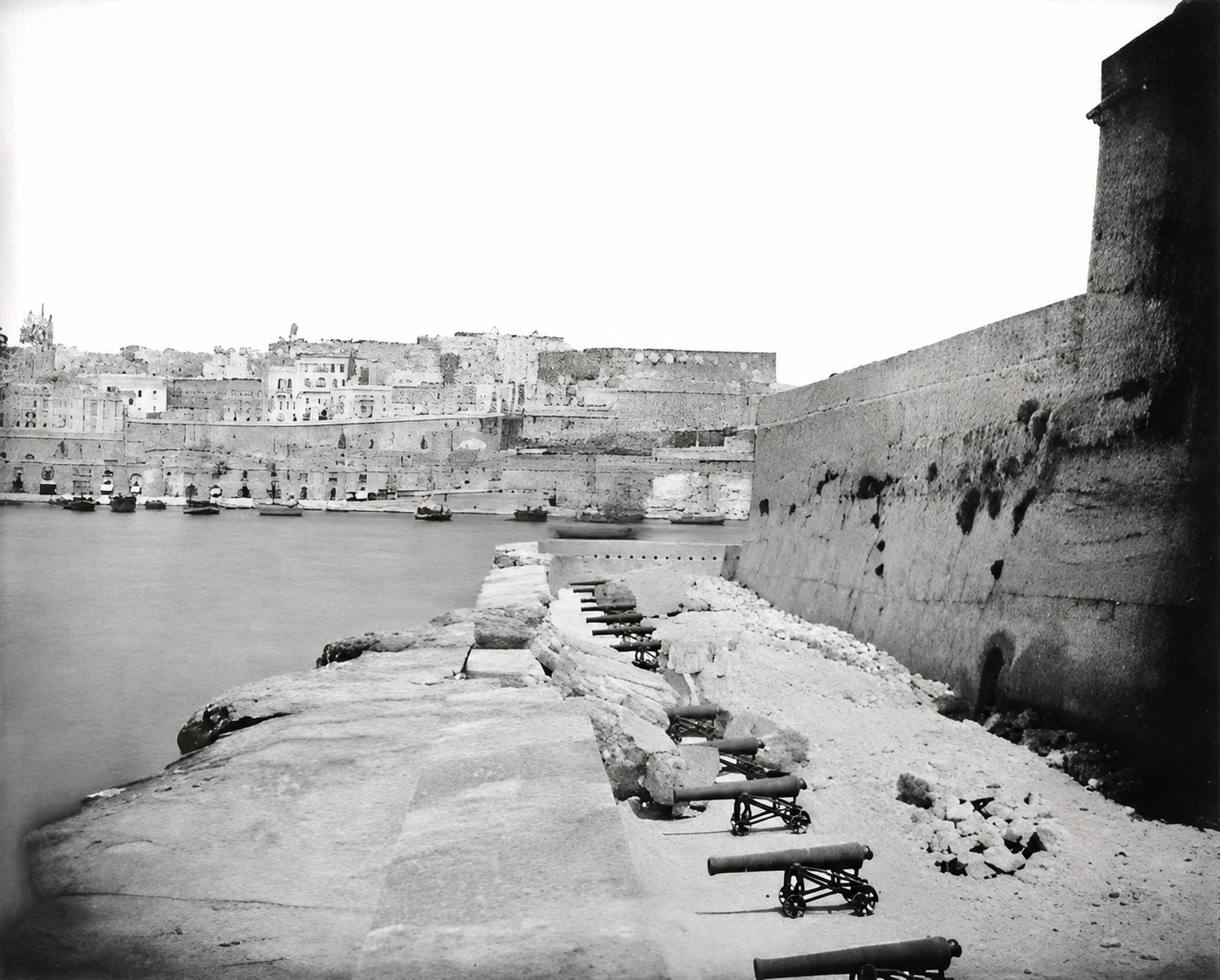
Cannon overlook the water from Fort St Angelo in an early view of Birgu’s harbour defences. The original archive caption attributes the photograph to the Reverend George Wilson Bridges and dates it to 1846.
A line of cannon follows the edge of the battery, with the fort’s high stone wall occupying the right side of the photograph. Beyond the guns, water separates this defensive position from the buildings on the opposite shore. The view brings the fort’s architecture and its control of the waterside into the same frame.
A stronghold at Birgu
Fort St Angelo occupies a prominent position at the end of Birgu, also known as Vittoriosa. When the Order of St John arrived in Malta in 1530, the existing stronghold became its headquarters. The fort was strengthened over time and played an important part in the Great Siege of 1565.
The surviving site therefore represents several periods of military building rather than a single construction campaign. In this photograph, the curved waterfront edge and the sequence of guns make that defensive purpose especially clear, although individual gun types cannot safely be identified from this copy.
An early photographic record
The original caption supplied with this image reads: “Fort St.Angelo in Birgu, Malta, taken in 1846 by Rev. George Wilson Bridges”. That attribution and date are retained as archive information; they have not been independently confirmed against the original negative or print.
The image is valuable for its view of the fort and the harbour before later alterations. It records the relationship between the guns, the stonework and the water, giving a very different perspective from a modern visit through the restored historic site.
Historical references
Heritage Malta — Fort St Angelo.
Government of Malta — Most of upper Fort St Angelo now accessible to the public, 17 December 2019.