✣Old MaltaIslands. Stories. Memories.
MaltaGozoCominoMalta in WW2Now and ThenHelp identifyAerial viewsVintage Maltese BusesPosters & Illustrations

circa 1870

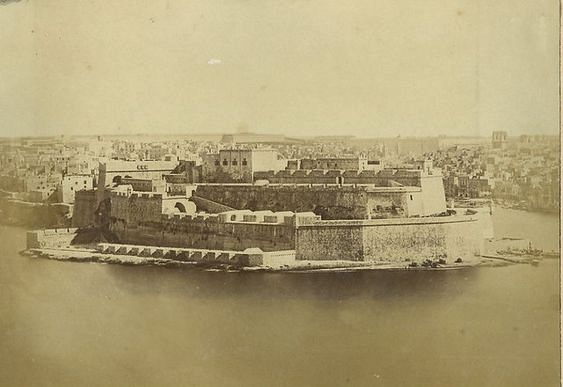
Fort St Angelo across the Water

Swipe across the photograph or use your keyboard’s left and right arrow keys to browse.

Original photoWeb version optimised without generated detailsCopyright / report rights
Share this memoryFacebookPinterestXRedditWhatsApp

A broad nineteenth-century harbour view shows Fort St Angelo and the buildings of Birgu behind it.

The fort’s massive sea-facing walls rise directly from the water, with a long sequence of pale buildings and the higher town spreading behind them. The low viewpoint gives the fort an almost continuous horizontal outline, interrupted by the taller buildings on the ridge.

Fort St Angelo stands at the end of Birgu, one of the Three Cities. Heritage Malta describes its long development as a harbour stronghold. In this photograph the relationship between the fortified edge and the surrounding town is more visible than the individual internal buildings. The approximate date follows the supplied caption.

The people make the picture

Your memories belong here.

Share your story

A familiar face. The name of a street. A moment you remember. Help us tell the stories this photograph cannot tell on its own.

Do you recognise this street? We haven’t identified it yet. A name, landmark or memory could help bring this photograph to life.

Be the first to share a memory

Everyone remembers something different

What does this photograph
bring back for you?

Did you live here? Do you recognise someone? Tell us about the shops, the neighbours, the everyday moments — or help identify the street or year.

You don’t need to know every detail. Say what you remember, and let us know when you are unsure.

There is room for everyone’s story. An editor reviews each contribution before publication. Your email, if supplied, stays private.
A few lines or a longer story — both are welcome. Use blank lines for paragraphs. Please share your own recollections and make clear which details are uncertain.
Can you identify the place, landmark, street or year? (optional)A recognised place or landmark is a suggestion until an editor checks it.For example: circa 1935, 1930–1940, or “I think this was the late 1950s”.

How we handle your contribution