✣Old MaltaIslands. Stories. Memories.
MaltaGozoCominoMalta in WW2Help identifyAerial viewsVintage Maltese BusesPosters & Illustrations

Circa early 20th century; published by 1929

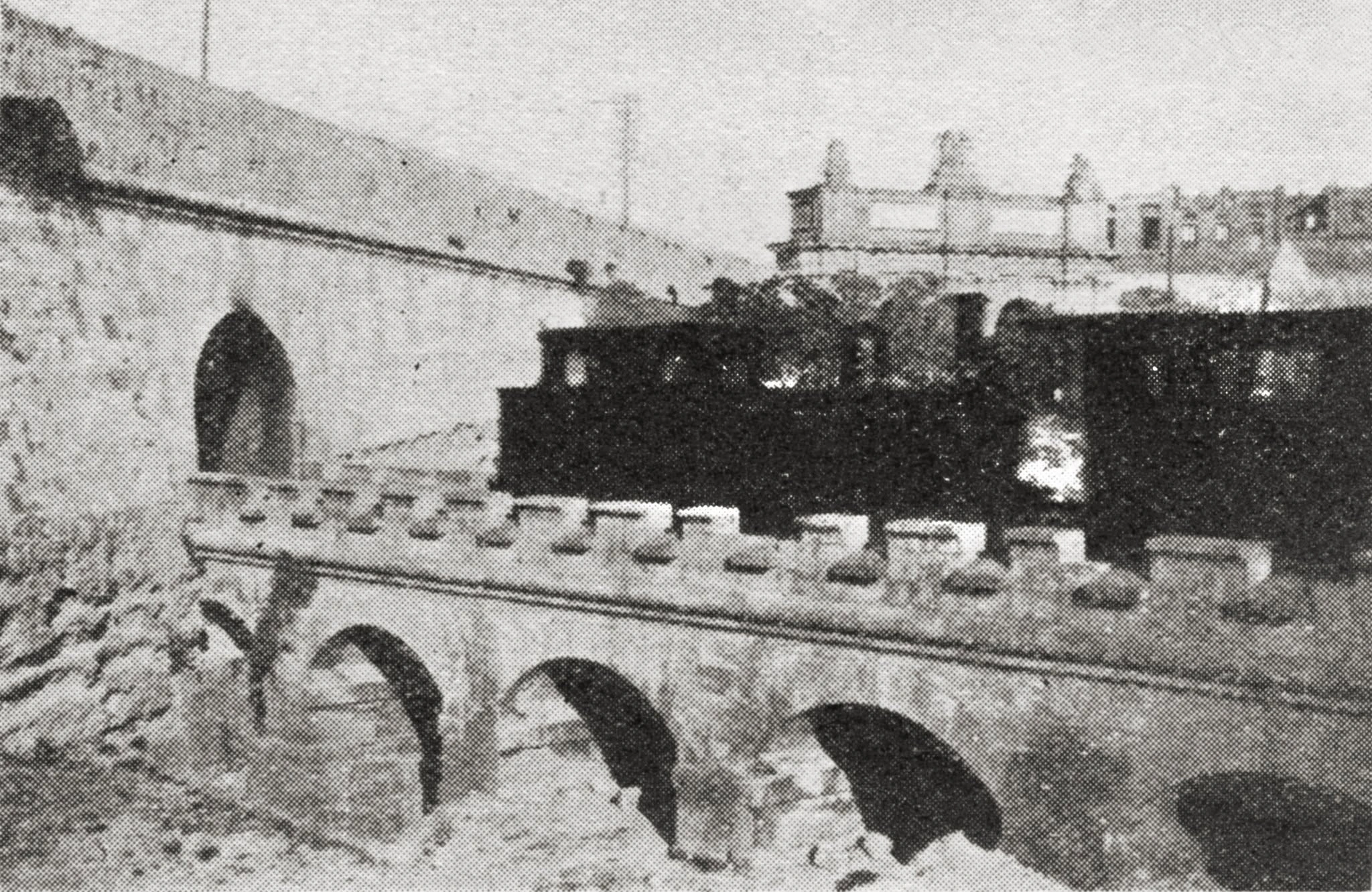
A Steam Train Crossing Floriana’s Ditch, Published by 1929

Photo 54 of 525 in the archive · Back to the archive

Swipe across the photograph or use your keyboard’s left and right arrow keys to browse.

A steam locomotive crosses the battlemented railway bridge over Floriana’s ditch beside a tunnel mouth, in a photograph published by 1929.

Floriana · Circa early 20th century; published by 1929

A train at the outer defences

A steam locomotive crosses a low stone viaduct with ornamental battlements above its arches. A tunnel mouth opens in the fortification wall on the left, while a carriage extends beyond the engine to the right. Masonry and the deep defensive ditch surround the railway on every side. The coarse printed texture of the supplied image remains visible.

Published by 1929, photographed earlier

David Martyn’s accompanying post identifies a Valletta-bound train crossing Floriana’s outer ditch and states that the picture was published in 1929. Publication supplies a latest possible date, rather than proving that the camera exposure was made in that year. Specialist field research on The Malta Railway confirms the surviving battlemented viaduct near Porte des Bombes and the adjacent tunnel arrangement. The modern comparison photograph in the source album is excluded from this historical record.

Original photoWeb version optimised without generated detailsCopyright / report rights
Share
Share this memoryFacebookPinterestXRedditWhatsApp

The people make the picture

Your memories belong here.

Share your story

A familiar face. The name of a street. A moment you remember. Help us tell the stories this photograph cannot tell on its own.

Be the first to share a memory

Everyone remembers something different

What does this photograph
bring back for you?

Did you live here? Do you recognise someone? Tell us about the shops, the neighbours, the everyday moments — or help identify the street or year.

You don’t need to know every detail. Say what you remember, and let us know when you are unsure.

There is room for everyone’s story. An editor reviews each contribution before publication. Your email, if supplied, stays private.
A few lines or a longer story — both are welcome. Use blank lines for paragraphs. Please share your own recollections and make clear which details are uncertain.
Can you identify the place, landmark, street or year? (optional)A recognised place or landmark is a suggestion until an editor checks it.For example: circa 1935, 1930–1940, or “I think this was the late 1950s”.

How we handle your contribution