✣Old MaltaIslands. Stories. Memories.
MaltaGozoCominoMalta in WW2Now and ThenHelp identifyAerial viewsVintage Maltese BusesPosters & Illustrations

Date not established

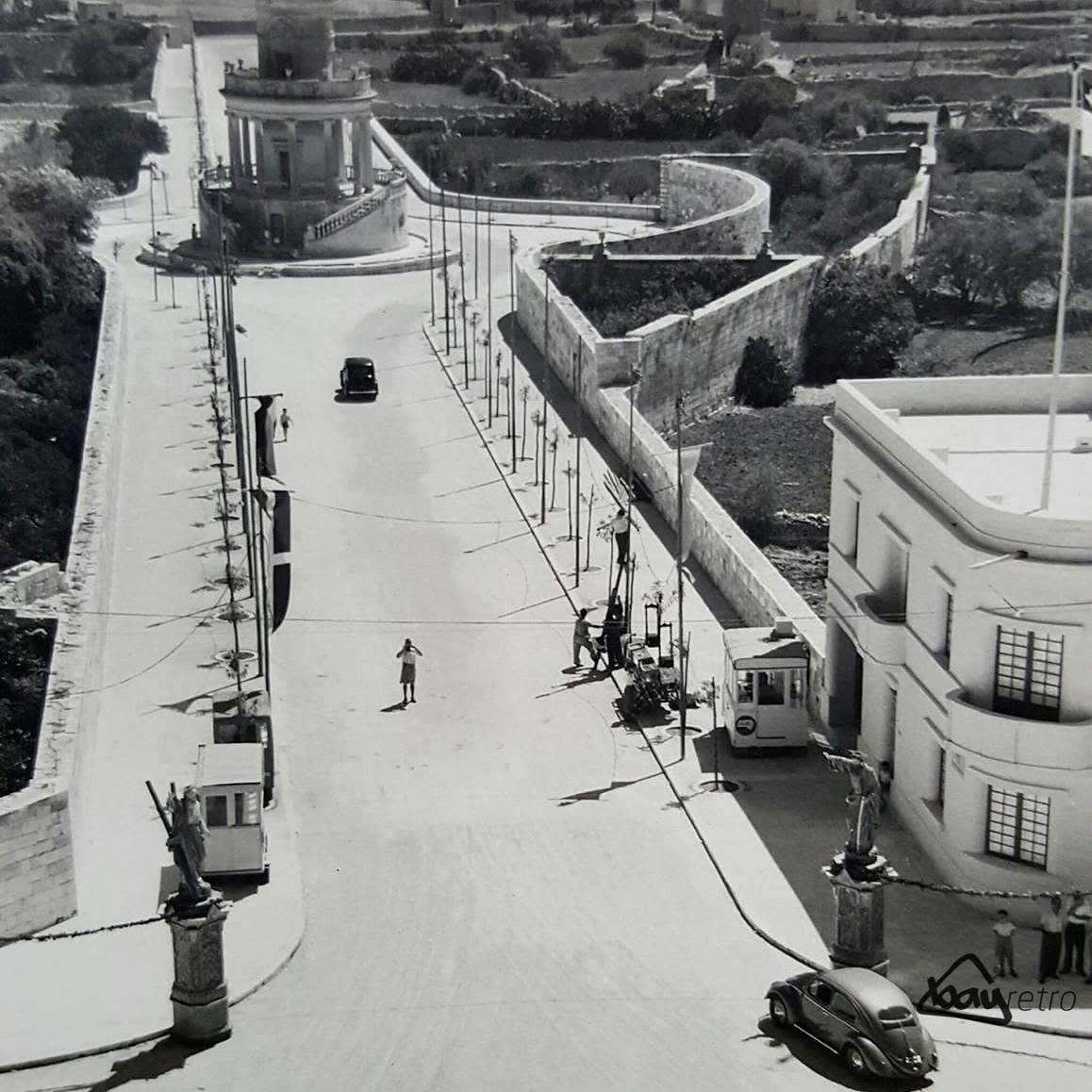
The Belvedere and Festival Avenue in Lija

Swipe across the photograph or use your keyboard’s left and right arrow keys to browse.

Original photoWeb version optimised without generated detailsCopyright / report rights
Share this memoryFacebookPinterestXRedditWhatsApp

Festival poles, two small kiosks and motor cars line the avenue leading towards Lija’s Belvedere Tower, with fields beyond.

The avenue towards the tower

The elevated view looks along a broad road towards the round, columned Belvedere Tower. Poles and hanging decorations line both sides. Two small kiosks stand near the foreground, with a few people and cars spaced along the road. Field walls and comparatively open land extend beyond the tower.

Lija’s Belvedere setting

The tower and its avenue identify the setting as Lija. An official local-council record places the Belvedere on Transfiguration Avenue. The photograph is historical, but no exposure year is supplied, so it remains undated. The visible Bovetto signature is retained as part of the source and credited without assuming it establishes the original photographer.

The people make the picture

Your memories belong here.

Share your story

A familiar face. The name of a street. A moment you remember. Help us tell the stories this photograph cannot tell on its own.

Be the first to share a memory

Everyone remembers something different

What does this photograph
bring back for you?

Did you live here? Do you recognise someone? Tell us about the shops, the neighbours, the everyday moments — or help identify the street or year.

You don’t need to know every detail. Say what you remember, and let us know when you are unsure.

There is room for everyone’s story. An editor reviews each contribution before publication. Your email, if supplied, stays private.
A few lines or a longer story — both are welcome. Use blank lines for paragraphs. Please share your own recollections and make clear which details are uncertain.
Can you identify the place, landmark, street or year? (optional)A recognised place or landmark is a suggestion until an editor checks it.For example: circa 1935, 1930–1940, or “I think this was the late 1950s”.

How we handle your contribution