✣Old MaltaIslands. Stories. Memories.
MaltaGozoCominoMalta in WW2Now and ThenHelp identifyAerial viewsVintage Maltese BusesPosters & Illustrations

Second World War, circa 1942

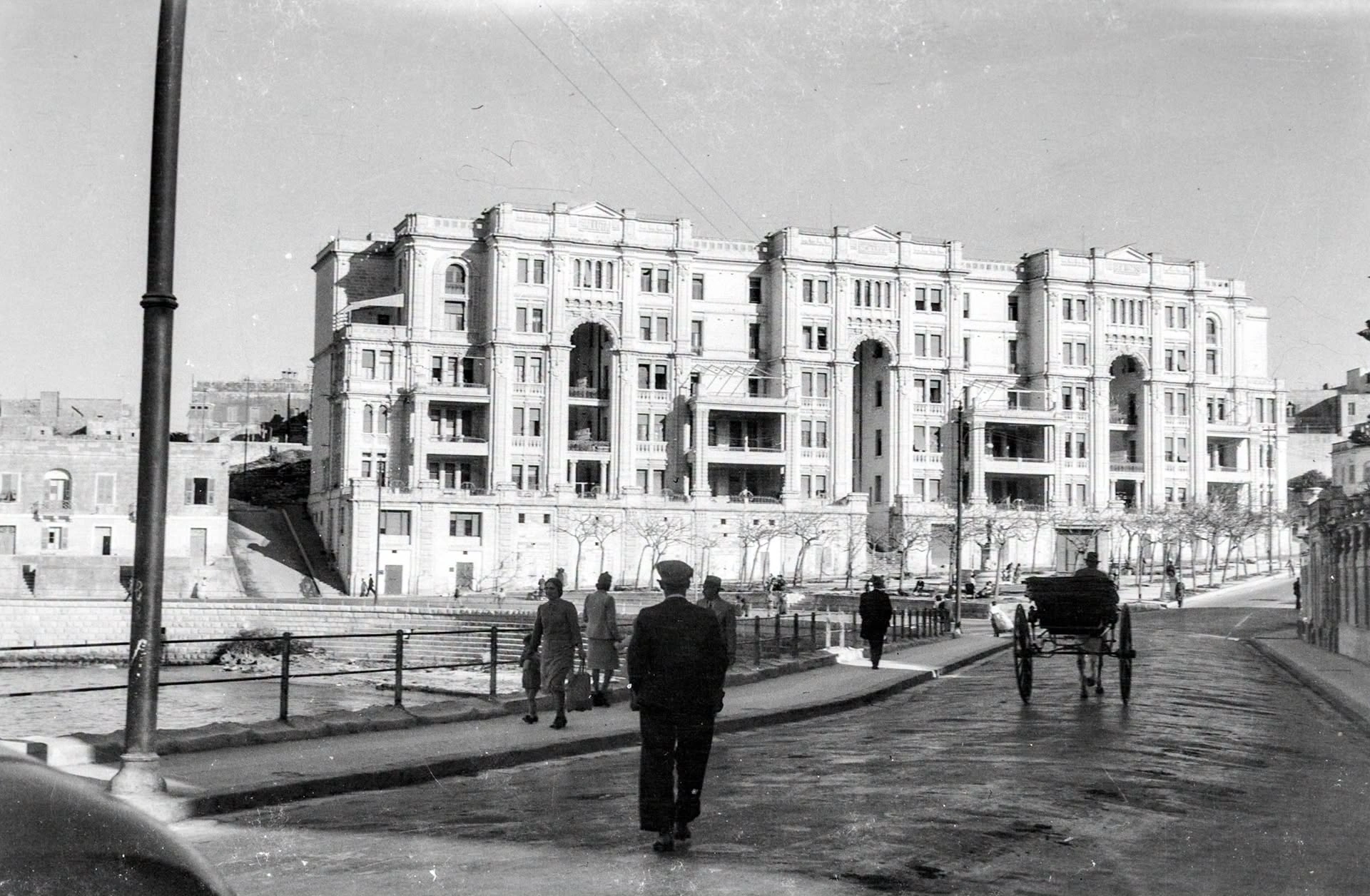
A Horse-Drawn Cart beside Balluta Buildings in Wartime

Swipe across the photograph or use your keyboard’s left and right arrow keys to browse.

Original photoWeb version optimised without generated detailsCopyright / report rights
Share this memoryFacebookPinterestXRedditWhatsApp

A horse-drawn cart and pedestrians pass Balluta Buildings beside the bay, in a photograph supplied as wartime 1942.

A cart below the tall façade

The three projecting sections of Balluta Buildings rise behind the waterfront road. Their tall recessed arches and balconies give the block its distinctive rhythm. Pedestrians walk beside the railing and along the wet-looking road, where a horse-drawn cart travels towards the buildings.

Balluta during the Second World War

The source identifies Balluta in 1942 and states that the image belongs to the Ciancio family estate. The national heritage inventory independently identifies Balluta Buildings in St Julian’s and describes its Art Nouveau design. The archive records the wartime period and circa 1942. An intact street scene is still part of wartime life; no air raid, damage or military event is invented for this view.

The people make the picture

Your memories belong here.

Share your story

A familiar face. The name of a street. A moment you remember. Help us tell the stories this photograph cannot tell on its own.

Be the first to share a memory

Everyone remembers something different

What does this photograph
bring back for you?

Did you live here? Do you recognise someone? Tell us about the shops, the neighbours, the everyday moments — or help identify the street or year.

You don’t need to know every detail. Say what you remember, and let us know when you are unsure.

There is room for everyone’s story. An editor reviews each contribution before publication. Your email, if supplied, stays private.
A few lines or a longer story — both are welcome. Use blank lines for paragraphs. Please share your own recollections and make clear which details are uncertain.
Can you identify the place, landmark, street or year? (optional)A recognised place or landmark is a suggestion until an editor checks it.For example: circa 1935, 1930–1940, or “I think this was the late 1950s”.

How we handle your contribution