✣Old MaltaIslands. Stories. Memories.
MaltaGozoCominoMalta in WW2Now and ThenHelp identifyAerial viewsVintage Maltese BusesPosters & Illustrations

1942

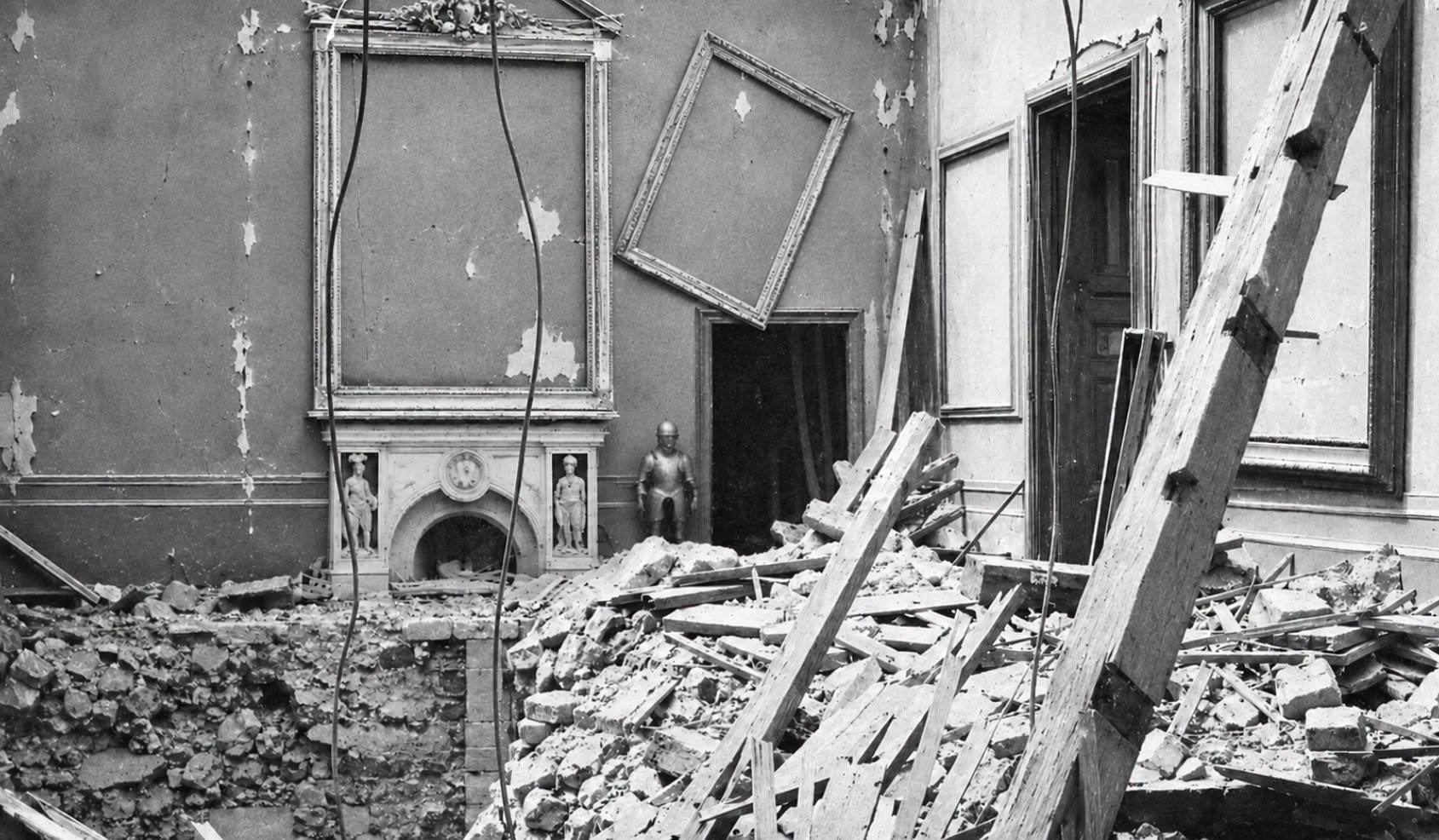
The Palace State Dining Room after the 1942 Bombing

Swipe across the photograph or use your keyboard’s left and right arrow keys to browse.

Original photoWeb version optimised without generated detailsCopyright / report rights
Share this memoryFacebookPinterestXRedditWhatsApp

Rubble and broken timbers fill the Palace State Dining Room in Valletta after wartime bombing, beneath empty picture frames and an ornate fireplace.

A ruined room with surviving details

Broken masonry and timber cover the floor, while cables hang down between empty picture frames. An ornate fireplace survives against the far wall, with a suit of armour standing nearby. These details preserve the character of the room amid the extensive destruction.

The Palace during the 1942 air raids

The parent source post identifies the State Dining Room after the April 1942 bombing of Valletta. The Palace’s institutional collection account confirms considerable damage from the February and April raids that year. The archive therefore places this image in the Second World War collection with 1942 as the established wartime year; an exact day of photography is not claimed.

The people make the picture

Your memories belong here.

Share your story

A familiar face. The name of a street. A moment you remember. Help us tell the stories this photograph cannot tell on its own.

Be the first to share a memory

Everyone remembers something different

What does this photograph
bring back for you?

Did you live here? Do you recognise someone? Tell us about the shops, the neighbours, the everyday moments — or help identify the street or year.

You don’t need to know every detail. Say what you remember, and let us know when you are unsure.

There is room for everyone’s story. An editor reviews each contribution before publication. Your email, if supplied, stays private.
A few lines or a longer story — both are welcome. Use blank lines for paragraphs. Please share your own recollections and make clear which details are uncertain.
Can you identify the place, landmark, street or year? (optional)A recognised place or landmark is a suggestion until an editor checks it.For example: circa 1935, 1930–1940, or “I think this was the late 1950s”.

How we handle your contribution