✣Old MaltaIslands. Stories. Memories.
MaltaGozoCominoMalta in WW2Now and ThenHelp identifyAerial viewsVintage Maltese BusesPosters & Illustrations

circa 1909–1913

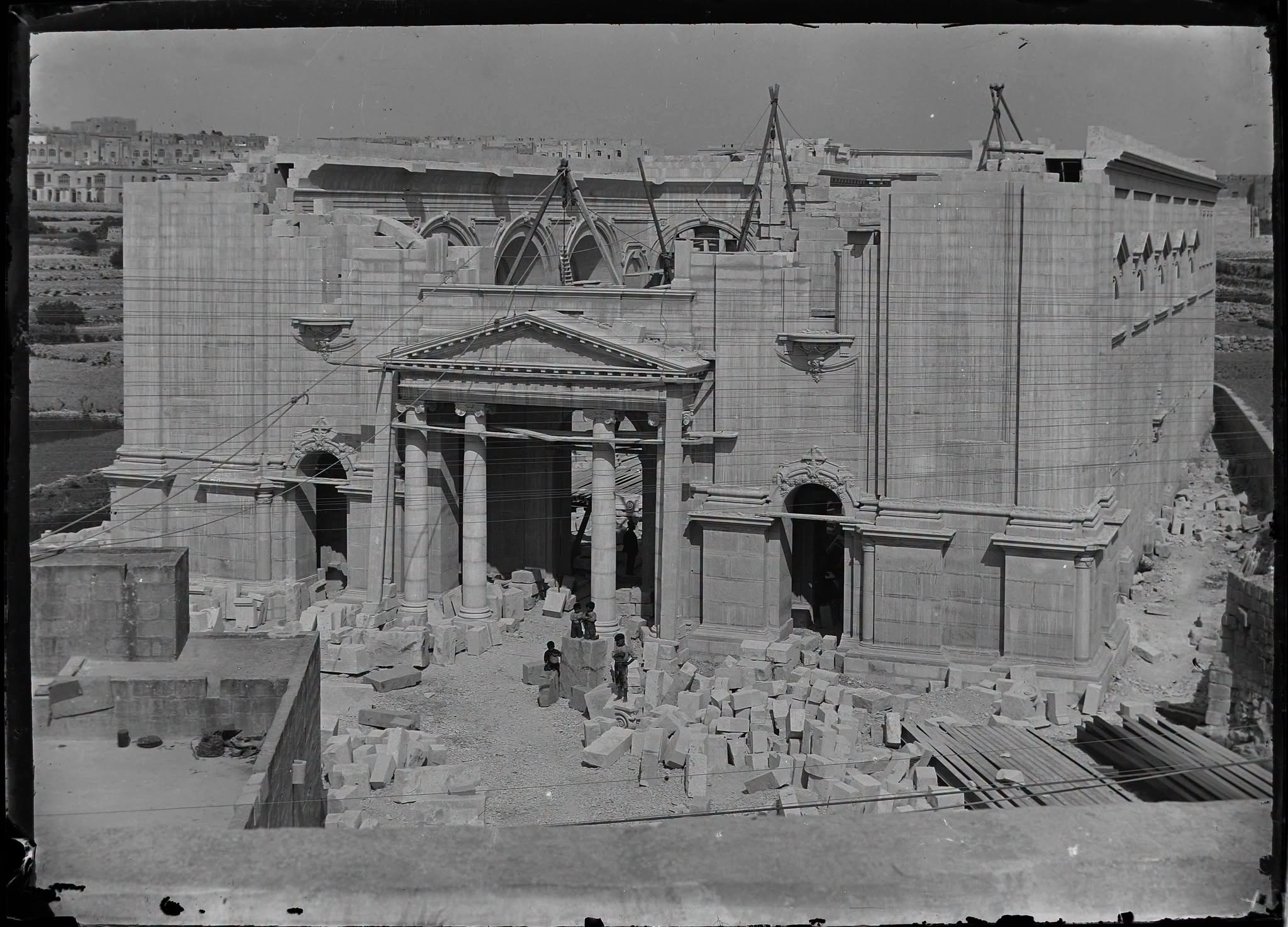
Building the Holy Trinity Church in Marsa

Swipe across the photograph or use your keyboard’s left and right arrow keys to browse.

Original photoWeb version optimised without generated detailsCopyright / report rights
Share this memoryFacebookPinterestXRedditWhatsApp

Masonry blocks, lifting derricks and unfinished upper walls surround the columned façade of Marsa’s Holy Trinity Church during construction.

A church rising among building stone

Cut blocks cover the ground before the church. The lower façade already has columns and a pediment, while the upper walls remain unfinished. Ladders and tall lifting frames stand above the masonry. Several people are visible among the materials. The wide view records both the new building and the open ground surrounding its construction site.

Building Holy Trinity in Marsa

The supplied archive attributes the photograph to Emanuele Sciortino and identifies the building as Marsa’s Holy Trinity Church. The Capuchin community records that construction began in 1909 and the church opened in 1913. Those endpoints support the broad period circa 1909–1913; they do not establish a particular exposure day. The photograph’s unfinished structure is consistent with that construction phase.

The people make the picture

Your memories belong here.

Share your story

A familiar face. The name of a street. A moment you remember. Help us tell the stories this photograph cannot tell on its own.

Be the first to share a memory

Everyone remembers something different

What does this photograph
bring back for you?

Did you live here? Do you recognise someone? Tell us about the shops, the neighbours, the everyday moments — or help identify the street or year.

You don’t need to know every detail. Say what you remember, and let us know when you are unsure.

There is room for everyone’s story. An editor reviews each contribution before publication. Your email, if supplied, stays private.
A few lines or a longer story — both are welcome. Use blank lines for paragraphs. Please share your own recollections and make clear which details are uncertain.
Can you identify the place, landmark, street or year? (optional)A recognised place or landmark is a suggestion until an editor checks it.For example: circa 1935, 1930–1940, or “I think this was the late 1950s”.

How we handle your contribution