✣Old MaltaIslands. Stories. Memories.
MaltaGozoCominoMalta in WW2Help identifyAerial viewsVintage Maltese BusesPosters & Illustrations

Date not confirmed

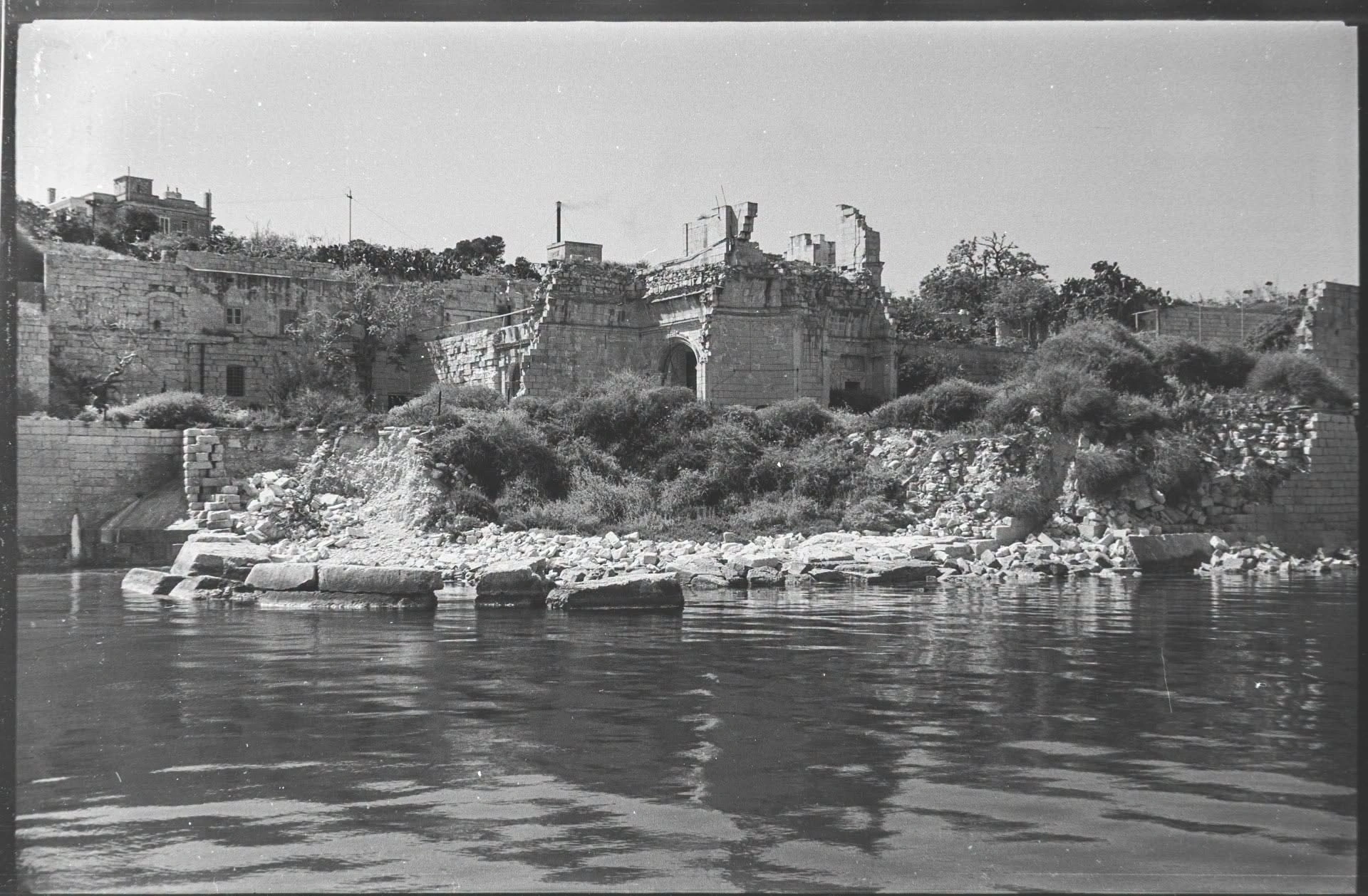
An Overgrown Ruin beside the Harbour

Photo 21 of 576 in the archive · Back to the archive

Swipe across the photograph or use your keyboard’s left and right arrow keys to browse.

Broken masonry, shrubs and surviving arched openings line a quiet harbour edge, in an unidentified scene described by the source as remnants of Cottonera.

Date not confirmed

Ruined masonry at the water’s edge

Still water reflects a low shoreline strewn with fallen stone. Behind it, an ornate arched opening survives within a damaged building, its upper walls broken away. Further masonry, small windows and heavy vegetation extend across the slope. A more intact house stands on higher ground at the left. The view records both the ruined architecture and its immediate relationship with the harbour.

Cottonera in the original description

The parent post calls the pair of photographs remnants of Cottonera. A contributor tentatively suggests the Bighi or Rinella shoreline, but that is not a sufficiently secure identification for a specific place or landmark tag. The archive therefore leaves the site and date open in Help identify. The surviving arch, cornice fragments and adjoining retaining walls are the strongest features for a future match. The visible damage alone does not establish its cause.

Original photoWeb version optimised without generated detailsCopyright / report rights
Share
Share this memoryFacebookPinterestXRedditWhatsApp

The people make the picture

Your memories belong here.

Share your story

A familiar face. The name of a street. A moment you remember. Help us tell the stories this photograph cannot tell on its own.

Be the first to share a memory

Everyone remembers something different

What does this photograph
bring back for you?

Did you live here? Do you recognise someone? Tell us about the shops, the neighbours, the everyday moments — or help identify the street or year.

You don’t need to know every detail. Say what you remember, and let us know when you are unsure.

There is room for everyone’s story. An editor reviews each contribution before publication. Your email, if supplied, stays private.
A few lines or a longer story — both are welcome. Use blank lines for paragraphs. Please share your own recollections and make clear which details are uncertain.
Can you identify the place, landmark, street or year? (optional)A recognised place or landmark is a suggestion until an editor checks it.For example: circa 1935, 1930–1940, or “I think this was the late 1950s”.

How we handle your contribution